Thursday, March 28, 2019

Week 12 Prompt Response

Readers' Advisory Matrix for
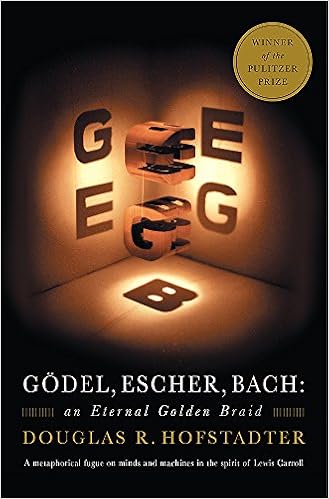
Gӧdel, Escher, Bach: an Eternal Golden Braid by Douglas R. Hofstadter

1. Where is the book on the narrative continuum?

A mix (contains highly narrative moments with periods of fact-based prose)

2. What is the subject of this book?

Hypothesizing the nature and origin of consciousness by examining "strange loops" (repetitions that appear to be self-generating) in the artwork of M. C. Escher, the music of J. S. Bach, and the mathematics of Kurt Gӧdel.

3. What type of book is it?

A long-form, interactive lesson taught by the author, interspersed with regular narrative sections in the form of fables.

4. Articulate appeal:
  • What is the pacing of the book?
    A slow burn, but the pacing relates to the reader's familiarity with the concepts being discussed, and greater familiarity will facilitate faster reading and a quicker pace.
  • Describe the characters of the book.
    The book has few characters, and when they exist they usually are simply a stand-in for an idea. In the many fables that pepper the book, readers will grow accustomed to the characters of Achilles, Tortoise, and Crab; in discussions about mathematical, musical, and artistic concepts, Gӧdel, Bach, and Escher are characters, but little is discussed about their lives or personalities - the book is all about their ideas.
  • How does the story feel?
    Like wandering in darkness until small lights start to flicker on as you begin to understand the author's ideas. Challenging, but thought-provoking and perspective-enlarging.
  • What is the intent of the author?
    To teach the reader new concepts and ways of thinking about the world, and kindling in the reader a sense of experimentation and discovery.
  • Does the language matter?
    Not much - the words are a vehicle to ideas, but the reader will not sink back into exquisite sentences and phrasing.
  • Is the setting important and well-described?
    No, there is no setting, and setting is largely irrelevant to the book.
  • Are there details and, if so, what?
    There are heaps upon heaps of details, mostly logical and mathematical, and the reader will need to be interested in learning many, many small details in order to understand larger concepts.
  • Are there sufficient charts and other graphic materials? Are they useful and clear?
    There are many illustrations and graphical representations of the concepts discussed in the book, and for the most part, they are helpful additions to the text.
  • Does the book stress moments of learning, understanding, or experience?
    All three, and these moments are the primary goal of the book. Whether the reader experiences these moments of understanding and learning will make or break how they experience the book as a whole.
5. Why would a reader enjoy this book? (rank appeal)
  • Learning and discovery
  • Interest in logic and mathematics
  • Detail-oriented

Saturday, March 23, 2019

Week 11 Prompt - Ebooks and Audiobooks

The growing number of media options for reading a book is making the work of readers' advisory considerably difficult because learning enough to recommend books from each medium requires consulting different sources and looking for different types of information and appeals. Dunneback (2011) points out the difficulty of advising patrons about ebooks when ebook file formats and compatible devices are an issue that can get in the way of a good recommendation. I worry that ebooks have the potential to contribute to disparities in equal access to information between those with more money and those with less. If some patrons have the financial means to purchase a proprietary device used to read ebooks that a library lends while others do not, the library is no longer providing equal access to information to all. I'm curious if there is a feasible way to loan out e-reader devices to patrons in order to address this problem? Of course, many file formats can now be used on all manner of devices, but there is still an underlying assumption that everyone has a device that can be problematic. I think it's important to consult with a patron at the beginning of a readers' advisory interview to determine what types of devices they have available to read potential ebook recommendations.

Audiobooks are also a fantastic way to experience reading, but come with a different set of appeal factors than print books. Mediatore (2003) points out that choice of narrator, tone of voice, and pacing of voice can have a stronger influence on audiobook listeners' enjoyment of a book than traditional print book appeal factors. One way I've noticed these appeal factors in my own audiobook listening experience is that narrators are often chosen in order to represent the author whose book they're reading. This can be a great thing, as more and more books by people from marginalized communities are published and adapted to audiobook, we as listeners get to experience the text more fully when we hear it read by a member of the author's community (or by the author themself). However, I've noticed that literary classics are almost invariably read by old British people, which only intensifies the misconception that classic works are cobwebby historical documents not intended for modern audiences. I think audiobooks offer exciting opportunities to experience books in a new way (whether we've read them before or not), but in order to properly recommend them to patrons we can't just rely on our knowledge of their print book versions - we need to investigate narration quality as well, and this forces us to find alternative review sources that focus specifically on audio quality.

References

Dunneback, K., & Trott, B. (2011). E-books and Readers' Advisory. Reference & User Services Quarterly, 50(4), 325-9.

Mediatore, K. (2003). Reading with Your Ears: Readers' Advisory and Audio Books. Reference & User Services Quarterly, 42(4), 318-23.

Wednesday, March 20, 2019

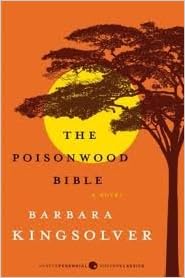
The Poisonwood Bible

The Poisonwood Bible

Barbara Kingsolver
Genre: Historical Fiction, Literary Fiction
Publication Date: 1998
Number of Pages: 546
Geographical Setting: Congo
Time Period: 1950s-80s
Plot Summary: A Southern Baptist family uproots from its life in Georgia to move to a small village
 in the Belgian colony of Congo in 1960. Driven by an evangelical zeal, the father Nathan Price 
aims to convert all the Congolese villagers to Christianity and baptize them, but finds a population
with little interest in Christianity, and even less interest in his fire and brimstone theology. Nathan’s 
wife Orleanna and their four daughters must find a way to adapt to life in the village of Kilanga and 
survive in the politically turbulent country. The women of the family are caught between the 
increasingly dangerous political turmoil of a Congo seeking independence and the growing 
madness of Nathan Price. This novel wrestles with themes of racism and colonialism, with 
interfamilial and spiritual relationships, and with the meaning of home.
Subject Headings: Congo,  Patrice Lumumba, Colonialism, Family Chronicle
Appeal:
  • Pacing: leisurely
  • Tone: atmospheric, foreboding
  • Writing style: lush, descriptive
Read-a-likes:
Five Quarters of the Orange by Joanne Harris - A historical novel centered around the life of a 
French woman, told in two time periods: part of the book is set when the woman is a child, the 
other when she is elderly. Jumping backward and forward in time, the book explores the reality 
of pre- and post-war France while inching ever closer to revealing the terrible secret at the heart 
of the main character’s life. The story is lavishly described and has a strong focus on food and 
other sensory details of place.

Things Fall Apart by Chinua Achebe - A novel set in Nigeria that explores life before and after 
colonial rule. The story explores the cultural shifts that occur when sudden change leaves one’s 
homeland permanently different. While focusing on similar themes that The Poisonwood Bible does, 
this novel approaches the topic from the point of view of the colonized, rather then the colonizer.

White Teeth by Zadie Smith - Set in modern day England, this novel explores the lives of an 
Englishman and an Indian immigrant. The two characters remember pivotal events from their 
lives, from World War II onward. This novel also explores the effects of British colonialism on 
both colonies and England itself. It is less focused on the history of colonialism than The 
Poisonwood Bible, and chooses instead to explore its modern implications.

Related authors:
  • Joanne Harris
  • Alice Walker
  • Anne Tyler

Saturday, March 9, 2019

Book Club Experience

Some of my college friend and I had the idea to start a book club a few months ago. The interest in forming the book club was partly social, partly gastronomic, but mostly a chance for good discussion. We have met twice now, each meeting being around six weeks apart. When we were discussing forming the group, we did not have a specific theme in mind for the types of books we’d like to read, but each person had a book or two that they had either read recently and wanted to discuss or that they were interested in reading.

Many of the books people suggested were nonfiction, related to current societal issues like racism and capitalism, so the first book we chose to read was We Were Eight Years In Power by Ta-Nehisi Coates, which is a series of essays about race and racism written throughout Barack Obama’s presidency. All of us in the group are pretty progressive and largely on the same page politically, but we are also a group of white people and part of the aim of the book club was to provide accountability for each other as we try to stay educated about racism and our privilege.  

We decided that we would each come up with some questions to bring to our first book discussion to get the conversation moving. This was a good idea, and lines up with the recommendation on the I Love Libraries page “Facilitating Discussion” (2015) to take notes while reading the book and bring them to the book club to spark discussion. This strategy would have worked better, however, if we had all done a better job of following another of the recommendations on that page to support our opinions with specific quotations from the book and with page numbers. We often found ourselves making vague assertions that were difficult to discuss because we did not have a specific quote or context to dig into.

Although we all enjoyed the book and brought plenty of ideas to discuss from it, our first book club meeting (as well as the subsequent one) have been frustrating because one of our group members is what I Love Libraries’ “Structuring Your Meeting” page (2015) describes as a “dominating personality.” The makeup of our group is three women and two men (one of which is me). The other man in the group dominated the entire conversation nonstop. He was always the first to respond when anyone else asked a question to the group, and his responses tended to be lengthy and full of long pauses; he just generally took up a lot of space. What’s more, he had a tendency (as many men do) to address the questions he asked the group directly to me, the other man. I did my best to respond to his questions when he asked them directly to me, but as this pattern continued to happen I began trying to give a brief answer and then divert the conversation another way by asking one of the women in the group a question. I could tell that the women in the group got more and more uncomfortable with the discussion as it progressed because of how central the man’s presence was to everything that was said. Eventually I decided to just stop responding altogether to any questions the man asked the group in order to allow the women in the group to respond when they felt comfortable doing so. This led to some long, uncomfortable silences in which the man would pose a question and nobody would respond. He seemed to be uncomfortable with the silences, so he would just respond to his own question when this happened.

The difficult thing about this situation is that we are all friends outside of the book club, but something about the construct of an organized space for discussion brings out the dominating personality in this man. Because of our relationships with one another, it has been difficult to broach the topic with him, and since our second book club meeting there has not been any talk of a third one. I think the book club could still end up working, but we would need to establish some more ground rules, and I think it might be valuable to follow the advice on the I Love Libraries “Structuring Your Meetings” page (2015) and assign a group leader for each meeting to better moderate the discussion. I also wonder if part of the problem is that we’ve been reading nonfiction so far. This dominating friend is very academic-minded and fond of debate, and nonfiction books might bring out this in him more than a good novel. It may also be valuable to just try and schedule a meeting without him to see how it goes, but that could quickly lead to hurt feelings.

My book club experience has been a tricky one to navigate, but I am still drawn to the potential conversations we might have if we can better moderate them.

References

Facilitating Discussion. (2015). Retrieved from http://www.ilovelibraries.org/booklovers/bookclub/facilitate-discussion

Structuring Your Meeting. (2015). Retrieved from http://www.ilovelibraries.org/booklovers/bookclub/structure-meeting

Sunday, March 3, 2019

Midterm Paper Summary

Here is the introduction to my midterm paper, which examines four major subgenres of science fiction for the purposes of readers' advisory work:

Science fiction is a wide and varied genre that attracts readers for a variety of reasons. Performing readers’ advisory work for patrons interested in science fiction can be difficult for librarians unfamiliar with the genre, but a bit of familiarity with science fiction’s subgenres and book awards can provide valuable help. This essay will examine four of science fiction’s broadest subgenres (hard science fiction, space opera, utopian fiction, and dystopian fiction), as well as major science fiction awards as beginning points for readers’ advisory. The four subgenres described here can also be thought of as two different axes for examining works belonging to the science fiction genre: hard science fiction and space opera being opposite ends of an axis that track the scientific rigor and accuracy of a work, and utopian and dystopian fiction forming another axis tracking a work’s overall tone and attitude toward the story. This is not an exact system, but provides a framework that may be helpful in a readers’ advisory capacity.

In the essay, I spend some time looking at the history of each of these four subgenres and recommend a list of books that are representative of aspects of the subgenre. For example, I examine the "hard science fiction" subgenre that focuses on scientific rigor and accuracy above all else, and also describe some of the problems this subgenre has had with bigotry, sexism, and gatekeeping. Then I contrast it with the space opera subgenre, which stands on the opposite end of the spectrum and focuses on grand scales, flashy effects, and character-driven stories.

Another axis I examine in the paper is the utopian/dystopian fiction spectrum. Utopian and dystopian fiction have lots of overlap, and fans of both types of story will defend their preference by pointing out how ultimately hopeful the subgenres can be, whether by depicting an ideal future society or by spurring readers to action by describing the worst possible future society. Stories do not tend to fall cleanly into one or the other of these subgenres, so it is helpful to think of them as opposite ends of a spectrum.

Hopefully my choice to divide science fiction into these main subgenres/axes is helpful for librarians unfamiliar with the genre looking for resources to help with advising readers who are looking for a good sci-fi book to read!

Friday, February 22, 2019

Week 7 Prompt Response

The CNN Business article about Roxane Gay's protest of Milo Yiannopoulos's book is a good reminder to those of us in positions of power to carefully consider the effects of our actions. Gay and Simon & Schuster both made a public and conscious choice to refuse to indulge Yiannopolous by giving him a platform (S&S went on to deny his book publication). Gay and S&S are a private individual and private corporation, and are well within their rights to protest the book the way they did (and I applaud them for it, actually). But does their protest mean that we as libraries should refuse to purchase the book, which has now been released under an independent publishing label?

I said "those of us in positions of power" earlier because I think that our role as librarians puts us in a position of power: the power to influence the flow of information. Whether we do so in a reference, technical services, or readers' advisory capacity, we have an obligation to critically examine the media and information we make available to our patrons. And we belong to an altogether different type of institution than a publishing house. We exist not to make money and sell books, but to peddle the free exchange of the widest possible variety of information. However, I don't think we can be neutral about it. We need to take a stance on material like Yiannopolous's book, not in a political sense of left or right, but in an informed sense of "this is helpful" or "this is unhelpful." Are there patrons who may benefit from this book if it's part of the collection? Does this book present misinformation or warp reality (more than other books in the collection)? I think we owe it to our patrons to be informed about the items in our collection, especially hot-button ones like Yiannopolous's book.

If some random person self-published a book full of vile and hateful comments about minority groups of people, I wouldn't think twice about excluding it from the library's collection (well, maybe I'd think twice, but certainly not three times). But because of Yiannopolous's celebrity and public recognition, I think we owe it to our patrons to make his book available so they can come to their own conclusions. Of course, we shouldn't add it to the collection in a vacuum--for every Milo Yiannopolous we add to the collection, we should add a Roxane Gay, a Ta-Nehisi Coates, a Zadie Smith, a Susan Sontag, and a Slavoj Žižek. (And we shouldn't stop there - those are just some I could come up with off the top of my head.) Then when we end up doing readers' advisory work, we have a much more varied and robust body of cultural criticism available to someone interested in the topic than just Yiannopolous's book. And if his book is right for the reader we're working with, we have an obligation to let the reader know about it, whatever our personal feelings on the book may be.

Science Fiction Annotation: Infomocracy by Malka Older

Infomocracy
Centenal Cycle #1

By Malka Older

Genres: Science Fiction, Political Thriller, Cyberpunk

Publication Date: 2016

Pages: 380

ISBN: 978-0765385154

Geographical Setting: The whole world, but a large portion of the story centers around events in Tokyo. This novel depicts a truly global society in which the main characters regularly fly between continents to work and investigate. This leads to a bit of fun exploring the consequences of climate change in the near future; for example, rising sea levels have swallowed Manhattan and the island nation of Maldives is now known as the Adapted Maldives since it now exists entirely on raised platforms above the submerged islands.

Time Period: The near future (2050-2100?). There is certainly more powerful technology more widely available, but it has not progressed to the point where it feels alien. National boundaries and conflicts are relatively unchanged from present day.

Series: The Centenal Cycle, a trilogy of which this book is the first. Infomocracy is followed by Null States and State Techtonics.

Plot Summary: In the near future, the world's population is divided into groups of 100,000 people (dubbed centenals), each of which is responsible for electing its own government. This system, known as micro-democracy, leads to situations in which, for example, a neighborhood in the Bronx might be governed by laws identical to a neighborhood in Tokyo but wildly different from the laws of its adjacent neighborhoods. Thousands of separate governments have proliferated across the world, but a few stand apart as the most popular and influential. Microdemocracy dictates worldwide elections be held every ten years, but now, weeks before the third microdemocratic election, Ken, a campaign worker for an up-and-coming government, and Mishima, a high-ranking employee at Information (a Google-esque corporation that acts as a neutral information source), begin investigating a plot that threatens to destabilize the upcoming election and the new fabric of society.

Subject Headings: Conspiracies, Elections, Futuristic politics, Dystopia

Appeals:

  • Pacing: fast
  • Tone: exploratory, idea-centered
  • Writing style: engaging, jargon
Read-a-likes:

Too Like the Lightning by Ada Palmer - Another utopian science fiction book that explores the ideas of different types of government, this time on an even more granular level than Infomocracy. In Palmer's novel, each citizen makes their own choice about which set of laws and governances they wish to follow. This is more a novel of ideas than one of action; the pacing is slower and the book is longer, but it explores similar societal constructs.

The Moon and the Other by John Kessel - A near-future exploration of a matriarchal society set on Earth's moon that explores the sociological implications of alternate power structures. Much more character-focused than Infomocracy, with somewhat slower pacing, Kessel's novel still has its fair share of thrilling action sequences while exploring big, philosophical ideas.

Snow Crash by Neal Stephenson - A classic cyberpunk novel set in a highly technologically advanced society. Because of humanity's fixation with its screens, much of life happens in virtual reality. This story is a fast-paced adventure in a world much like our own, with an examination of the societal effects of over-reliance on technology.


Similar Authors:
  • Margaret Atwood
  • Ada Palmer
  • Chang Rae-Lee


Thursday, February 14, 2019

Week Six Prompt

I've heard of some libraries trying out a "Blind Date with a Book" display, particularly around Valentine's Day, and I think it could be a particularly effective method for helping patrons interact with books in the romance genre specifically. I wouldn't limit the display to only novels, however; patrons could check out a mystery book, audiobook, movie, or graphic novel! All of the items in the display would be anonymized somehow, like by putting each one in its own brown paper bag, and then librarians could create descriptions for the items in the form of personal ads that would be easily visible to patrons. For example, a personal ad for The Time Traveler's Wife could read something like:

Lovestruck novel seeks passionate reader who enjoys getting so caught up in romantic adventures that they lose their sense of time.

This format could apply equally well for other types of media and the display could also include romantic comedy movies (like Love Actually) and coming of age graphic novels with a romantic twist (like Blankets by Craig Thompson). The personal ads on the items could help readers decide if they're looking for a safe, familiar romance recommendation or something that might push them a little out of their comfort zone, and the display might even draw new fans into the genre!

Romance Annotations: The Shunning by Beverly Lewis

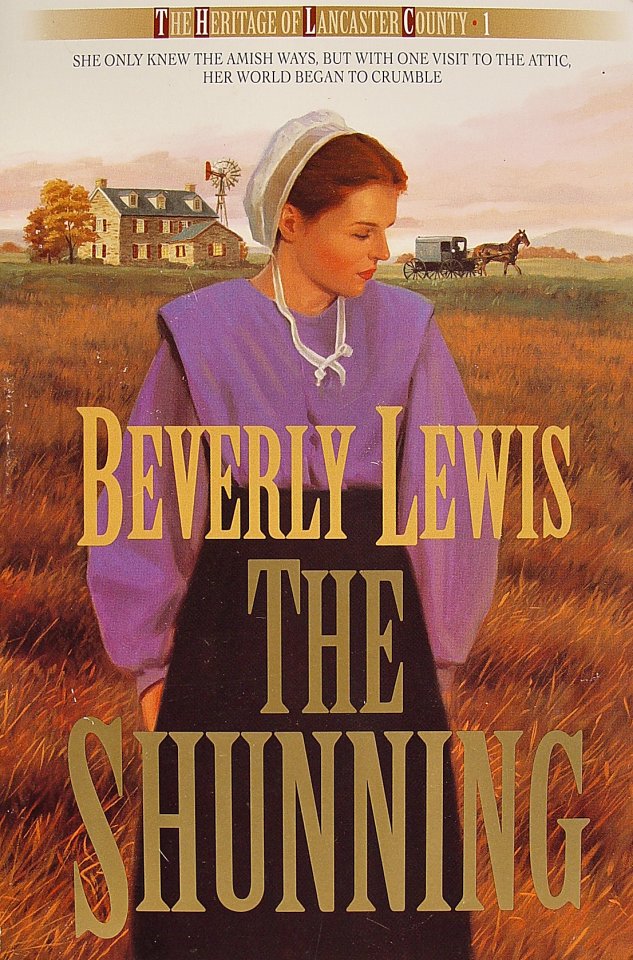
The Shunning
The Heritage of Lancaster County #1

By Beverly Lewis

Genres: Romance, Religious Fiction, Amish Fiction, Gentle Reads.

Publication date: 1997

Pages: 283

ISBN: 978-1556618666

Geographical Setting: Lancaster County, Pennsylvania; an insular Amish community in the country called Hickory Hollow.

Time Period: Unspecified, but probably set sometime in the last thirty years. The Amish community setting makes the time period feel more like the mid 1800s in terms of technology and mannerisms.

Series: The Heritage of Lancaster County Trilogy. This is the first book in the series, and is followed by The Confession and The Reckoning.

Plot Summary: Katie Lapp is a 22 year old woman living in an Amish community who has always felt somewhat at odds with the Amish ways of life. She finds the Amish standards dictating her place in society to be stifling and has a secret love of music (which is strictly forbidden). Katie shared this love of music with her first love, an Amish man named Daniel Fisher, until he drowned tragically at sea. Since then Katie has tried to stamp out this passion for music in order to fit into her community and prepare for her upcoming marriage to the local minister John Beiler. However, her attempts to fit in are made more difficult when she discovers a mysterious satin baby dress in the attic that causes a rift between Katie and her mother and casts Katie's whole identity into question. Katie struggles with questions of identity, loyalty, and love in this coming-of-age story of self-discovery.

Subject Headings: Amish fiction, Lancaster County, Amish women, Shunning

Appeals:
  • Pacing: leisurely
  • Tone: comforting, rustic
  • Writing Style: descriptive, reflective, simple
Three terms that best describe the book: warm, questioning, individualistic

Read-a-likes:


The Covenant by Beverly Lewis - Lewis is one of the most popular and esteemed writers of Amish fiction and romance, and the first book in the Abram's Daughters series is likely to scratch the same itch as The Shunning. It follows an Amish girl who falls in love with an "English" (non-Amish) boy and has similar themes of questioning and self-identity within a traditionally rigid Amish setting.


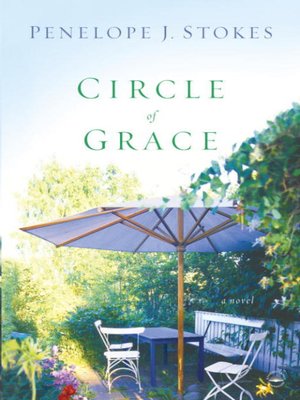
Circle of Grace by Penelope J. Stokes -  A group of female friends from college decides to keep in touch by writing a collaborative journal that is passed from one to the next. One of the women is diagnosed with terminal cancer and organizes to meet up with her friends in person one last time. She suffers a crisis of faith and identity when she learns that not all of her friends have been entirely truthful in their accounts of their lives in the journal.


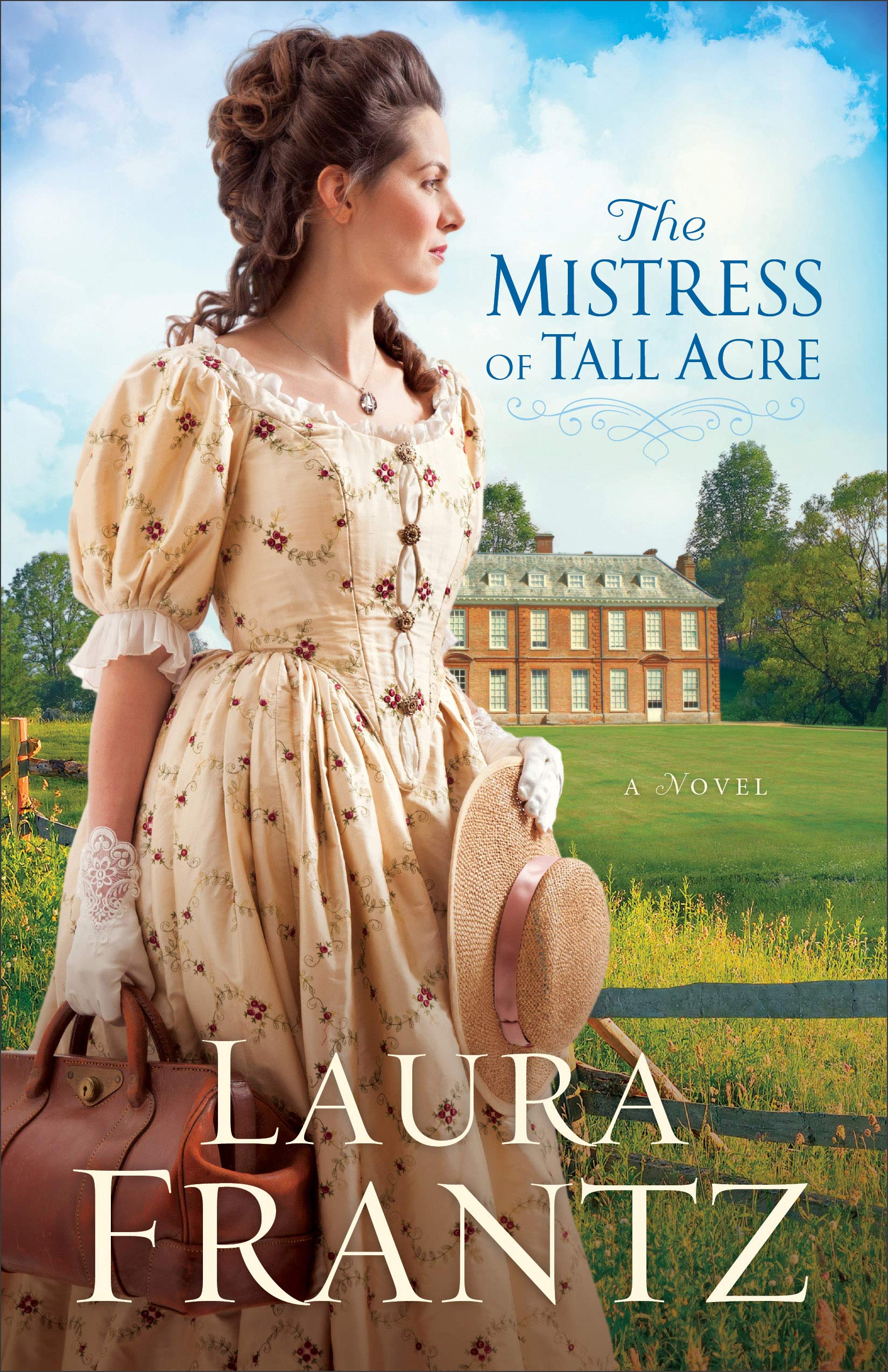
The Mistress of Tall Acre by Laura Frantz - This historical tale of Christian romance follows a woman who marries an army general from the American Revolution. She faces difficult decisions when another woman from her new husband's past arrives and casts her role into doubt. A compelling and fast-paced book with complex characters.


Similar authors:
  • Francine Rivers
  • Cindy Woodsmall
  • Amy Clipston

Sunday, February 10, 2019

Kirkus Review

Gnomon

by Nick Harkaway

A kaleidoscopic novel of interweaving stories, Gnomon is structured like a mind-bending Mobius strip.

In a near-future London, every aspect of life is constantly under surveillance by an artificial intelligence known as The Witness. The Witness's observations normally allow for unprecedented peace and order in society, but something has gone wrong. A suspected dissident named Diana Hunter has died under government interrogation, an unprecedented occurrence under the peaceful reign of The Witness. The story follows Inspector Mielikki Neith, a detective working for the government and The Witness, as she works to unravel the circumstances of Hunter's death. In the world of Gnomon, interrogations are conducted by linking directly to a subject's brain to ensure that no information can be hidden. As Neith investigates the recording of the interrogation, she is shocked to find memories in Hunter's mind that have no right to be there. The perspectives and memories of a Greek mathematician whose near-death encounter with a shark allow him to see a coming collapse of the stock market, a contemporary of St. Augustine who seeks an alchemical path to the underworld, an Ethiopian artist who sets out to design a revolutionary video game, and a hive-mind entity composed of thousands of bodies living in the distant future all vie for attention in Hunter's mind. As Neith tries to separate Hunter's memories from the others, she is pulled into a conspiracy that threatens to unravel her entire reality.

A vivid and fantastical exploration of memory and reality, and of the power of stories to shape and warp our lives.

____________________________________________________________________________________________________

Pub date: January 9th, 2018                               Page count: 688pp                                  Review posted online: Feb. 10, 2019
ISBN:  978-1524732080                                    Publisher: Knopf
_____________________________________________________________________________________________________

Saturday, February 9, 2019

Week 5 Prompt

If I was deciding whether to add The Billionaire's First Christmas to a collection, the two reviews were not wildly convincing. The Amazon review, however, did a nice job of explaining some of the book's appeals and characteristics and giving helpful information (e.g. the book is part of a series, it has multiple points-of-view, there's no explicit sex, etc.). Unfortunately, it did not convince me of the book's quality, and neither did the blog reviewer, who didn't even seem to know what they actually thought about the book after reading it, much less write about it coherently. I would hesitate to add the book to my library's collection, but I wouldn't forget about the appeal factors listed by the Amazon reviewer in case I wanted to recommend the book in a readers' advisory capacity.

The professional reviews for Angela's Ashes, on the other hand, do an excellent job of convincing the reader to add the book to their collection. The reviews are much better written than those for the romantic suspense book, and are given added clout by the publications they're printed in. Because they can more competently describe the appeals of the book, they make it easier for me to understand why I should add it to my library's collection.

I don't think it's entirely fair that print books are reviewed more often and favorably than ebooks or self-published books, but I also think there's something to be said for filtering out lower quality books from being reviewed in order to give more attention to higher quality books. Despite Ranganathan's insistence that every book has its reader, I don't believe all books are created equal, and I appreciate the work of professional reviewers who do their best to identify good writing and excellent books. But I think there are certainly biases in the publishing industry that make it easier for particular types of novels to be published and well-reviewed (literary fiction, for example) and harder for others (like romance).

I think the most important thing when considering to add a book to a library's collection is to consult multiple reviews from different types of sites. I think Goodreads is a fantastic place to get people's opinions on a book, even if there is a range of quality to the reviews, because reviewers are unafraid to make very clear what aspects of the book did and did not appeal to them. But I think it's helpful to also cross reference those reviews with reviews from more prestigious publications like Library Journal, Booklist, and Kirkus to make a more informed decision. I also think it's worth tracking down reviews of genre fiction from places that specialize in that genre. For example, Tor.com's science fiction and fantasy blog probably has a more nuanced review for new sci-fi/fantasy titles than Kirkus does because it assumes a certain level of reader familiarity with the genre, allowing it to place the book under review in the context of the rest of the genre and provide a more granular feel for its appeals.

I don't have strong feelings about review sources that don't print negative reviews, because I think positive reviews are generally more helpful (from a collection management, readers' advisory, and personal reading perspective) than negative ones. I'd rather read reviews that get me excited about a book and that communicate the passion the reviewer has for it than reviews that just dunk on a mediocre book. The latter type of review may be fun to write and is occasionally fun to read, but ultimately feels like a bit of a waste of time to me if I'm looking for something to read rather than something not to read. So I appreciate when reviewing sites take the time to pick through a lot of books and only review the ones they find most exciting.

I do a lot of purchasing for my library and it's the really positive reviews that give me the best sense of what to order and what might be most exciting for our readers. My library is quite small, though, and our budget isn't huge, so maybe if I had more books to purchase each month I would welcome more negative reviews to narrow down the field of potential acquisitions.

Saturday, February 2, 2019

Secret Shopper Assignment

I visited my local public library to ask for a book recommendation, and the librarians seemed very unprepared to answer such a question! I think my question took the reference librarian off-guard, and she wasn't able to find any good recommendations for me. Part of the problem was that she didn't use any readers' advisory tools, and instead chose to walk me over to the new books display and pull a few titles off the shelf at random, none of which really fit my request (I had asked for a good science fiction novel). She eventually had me talk to the librarian who orders science fiction materials, but he was more interested in having a conversation with me about the sort of books he liked than finding a good recommendation for me. In the end he wished me luck with my search, but didn't provide any great leads. I would be hesitant to use this library again for readers' advisory questions, and my impression is that the librarians there don't get many questions of this type.

Wednesday, January 23, 2019

Week 3 Prompt

1. I am looking for a book by Laurell K. Hamilton. I just read the third book in the Anita Blake series and I can’t figure out which one comes next!

I did a series search in NoveList for “Anita Blake” and found the “Anita Blake: Vampire Hunter” series. The fourth book in the series is The Lunatic Cafe, published in 1994.

2. What have I read recently? Well, I just finished this great book by Barbara Kingsolver, Prodigal Summer. I really liked the way it was written, you know, the way she used language. I wouldn't mind something a bit faster paced though.

Before I tried NoveList, I checked with my partner (who’s a big Barbara Kingsolver fan) and she recommended reading a novel by Joanne Harris, who writes in a similar style to Barbara Kingsolver (very lyrical and descriptive sensory details) but tends to write somewhat shorter books than Kingsolver with a greater emphasis on plot. Good novels to start with would include Chocolat and The Five Quarters of the Orange.

Checking NoveList, I found a few good options. State of Wonder by Ann Patchett might be a good fit because it is a lyrical, character driven novel by a female author that travels out of her comfort zone for the sake of research. Frog Music by Emma Donoghue may also be a good fit - although it’s a mystery, it involves a biologist and is fast-paced with beautiful writing.

3. I like reading books set in different countries. I just read one set in China, could you help me find one set in Japan? No, not modern – historical. I like it when the author describes it so much it feels like I was there!

Pachinko by Min Jin Lee might be a good fit - it’s set in the early 1900s in both Japan and Japan-occupied Korea. It tells a story of how people’s identities are formed in relation to their home countries, and offers a look at Japan’s historical relationship with its neighbors, which might give you a better understanding of different countries’ relationships with one another. If you’re looking for literature from a bit farther back in Japan’s history, you could try Shogun by James Clavell, which is the first book in a historical fiction trilogy set in and around Japan. If you’re looking for a riveting, fast-paced, and dramatic read, this would be a book to try. Another option would be The Samurai’s Wife by Gail Tsukiyama, which is historical fiction set in the 1930s that follows a young Chinese man who moves to Japan as he recovers from tuberculosis. (By the way, I hope you like tuberculosis, because it appears to be a major plot point in most of the Japan-centered historical fiction!)

4. I read this great mystery by Elizabeth George called Well-Schooled in Murder and I loved it. Then my dentist said that if I liked mysteries I would probably like John Sandford, but boy was he creepy I couldn't finish it! Do you have any suggestions?

Broadchurch by Erin Kelly is a police procedural murder mystery about an 11-year-old boy found murdered in a small British town. It lacks the graphic violence and gritty tone of John Sandford novels, focusing instead on a character-driven story with an atmospheric tone. Another mystery series you might enjoy is Martha Grimes’ Richard Jury books. Like Well-Schooled in Murder, these books follow police officers investigating crimes in England, but they have a lighter, more humorous tone to them. The first book in this series is called The Man With a Load of Mischief. You might also consider Louise Penny’s Inspector Armand Gamache series for a different locale - they are set in Montreal, and are highly descriptive with a strong sense of place.

5. My husband has really gotten into zombies lately. He’s already read The Walking Dead and World War Z, is there anything else you can recommend?

He could try out The Zombie Autopsies: Secret Notebooks from the Apocalypse by Steven C. Schlozman, which is another take on the zombie apocalypse similar to World War Z, but instead of interviews with survivors, it compiles medical notebooks from a doctor who is dissecting and studying zombie anatomy and physiology. If he’s looking for something a bit longer, he could try out the Newsflesh series by Mira Grant, a story of a conspiracy to cover up a zombie outbreak and the journalists who try to uncover it. The first book in the series is called Feed. Another option would be The Reapers are the Angels by Alden Bell, a beautifully written survival story about a band of people trying to find safety in a brutal, zombified world.

6. I love books that get turned into movies, especially literary ones. Can you recommend some? Nothing too old, maybe just those from the last 5 years or so.

A Man Called Ove by Fredrik Backman is a charming story about older man whose plan to commit suicide after his wife’s recent death is put on hold as he gets caught up in relationships with his neighbors. This book has been translated from Swedish and was released as a movie in 2015. Another option is The Children Act by Ian McEwan, a poignant story about a judge who must preside over a difficult legal case involving a dying child while she experiences difficulty in her marriage. The story was adapted into a movie in 2017.

7. I love thrillers but I hate foul language and sex scenes. I want something clean and fast paced.

Need to Know by Karen Cleveland is a new spy thriller that follows a CIA agent trying to expose undercover Russian agents in the U.S. - it’s fast-paced, thrilling, and suspenseful. Open Your Eyes by Paula Daly is a crime thriller that explores the life of a woman after her husband, a thriller novel writer, is attacked and put in a coma. It’s a suspenseful and intricately plotted page turner. Both of these books avoid gritty realism and explicit sex scenes.

-------------------------------------------------------------------

When I’m looking for a book to read, I usually start with Amazon, searching for a book that I’ve recently read and enjoyed, then looking at the suggested books to see what catches my eye. When I’ve found a few potentials, I usually head to Goodreads to see what people think of them. I find that lots of Goodreads users compare books in their reviews, and this makes reading reviews another good source for finding new reads. In the couple years I’ve started following Tor.com’s publishing blog, which I have found to be a fantastic source for learning about a wide variety of science fiction and fantasy books, as well as sci-fi/fantasy-adjacent books that straddle genres but often have one foot in the fantastical. I also enjoy looking through NPR’s end of the year book concierge that picks out highlights from lots of different genres published in the past year.