The CNN Business article about Roxane Gay's protest of Milo Yiannopoulos's book is a good reminder to those of us in positions of power to carefully consider the effects of our actions. Gay and Simon & Schuster both made a public and conscious choice to refuse to indulge Yiannopolous by giving him a platform (S&S went on to deny his book publication). Gay and S&S are a private individual and private corporation, and are well within their rights to protest the book the way they did (and I applaud them for it, actually). But does their protest mean that we as libraries should refuse to purchase the book, which has now been released under an independent publishing label?
I said "those of us in positions of power" earlier
because I think that our role as librarians puts us in a position of
power: the power to influence the flow of information. Whether we do so
in a reference, technical services, or readers' advisory capacity, we
have an obligation to critically examine the media and information we
make available to our patrons. And we belong to an altogether different type of institution than a publishing house. We exist not to make money and sell books, but to peddle the free exchange of the widest possible variety of information. However, I don't think we can be neutral about it. We need to take a stance on material like Yiannopolous's book, not in a political sense of left or right, but in an informed sense of "this is helpful" or "this is unhelpful." Are there patrons who may benefit from this book if it's part of the collection? Does this book present misinformation or warp reality (more than other books in the collection)? I think we owe it to our patrons to be informed about the items in our collection, especially hot-button ones like Yiannopolous's book.
If some random person self-published a book full of vile and hateful comments about minority groups of people, I wouldn't think twice about excluding it from the library's collection (well, maybe I'd think twice, but certainly not three times). But because of Yiannopolous's celebrity and public recognition, I think we owe it to our patrons to make his book available so they can come to their own conclusions. Of course, we shouldn't add it to the collection in a vacuum--for every Milo Yiannopolous we add to the collection, we should add a Roxane Gay, a Ta-Nehisi Coates, a Zadie Smith, a Susan Sontag, and a Slavoj Žižek. (And we shouldn't stop there - those are just some I could come up with off the top of my head.) Then when we end up doing readers' advisory work, we have a much more varied and robust body of cultural criticism available to someone interested in the topic than just Yiannopolous's book. And if his book is right for the reader we're working with, we have an obligation to let the reader know about it, whatever our personal feelings on the book may be.
Friday, February 22, 2019

Science Fiction Annotation: Infomocracy by Malka Older

Centenal Cycle #1
By Malka Older
Genres: Science Fiction, Political Thriller, Cyberpunk
Publication Date: 2016
Pages: 380
ISBN: 978-0765385154
Geographical Setting: The whole world, but a large portion of the story centers around events in Tokyo. This novel depicts a truly global society in which the main characters regularly fly between continents to work and investigate. This leads to a bit of fun exploring the consequences of climate change in the near future; for example, rising sea levels have swallowed Manhattan and the island nation of Maldives is now known as the Adapted Maldives since it now exists entirely on raised platforms above the submerged islands.
Time Period: The near future (2050-2100?). There is certainly more powerful technology more widely available, but it has not progressed to the point where it feels alien. National boundaries and conflicts are relatively unchanged from present day.
Series: The Centenal Cycle, a trilogy of which this book is the first. Infomocracy is followed by Null States and State Techtonics.
Plot Summary: In the near future, the world's population is divided into groups of 100,000 people (dubbed centenals), each of which is responsible for electing its own government. This system, known as micro-democracy, leads to situations in which, for example, a neighborhood in the Bronx might be governed by laws identical to a neighborhood in Tokyo but wildly different from the laws of its adjacent neighborhoods. Thousands of separate governments have proliferated across the world, but a few stand apart as the most popular and influential. Microdemocracy dictates worldwide elections be held every ten years, but now, weeks before the third microdemocratic election, Ken, a campaign worker for an up-and-coming government, and Mishima, a high-ranking employee at Information (a Google-esque corporation that acts as a neutral information source), begin investigating a plot that threatens to destabilize the upcoming election and the new fabric of society.
Subject Headings: Conspiracies, Elections, Futuristic politics, Dystopia
Appeals:
- Pacing: fast
- Tone: exploratory, idea-centered
- Writing style: engaging, jargon
Read-a-likes:

Too Like the Lightning by Ada Palmer - Another utopian science fiction book that explores the ideas of different types of government, this time on an even more granular level than Infomocracy. In Palmer's novel, each citizen makes their own choice about which set of laws and governances they wish to follow. This is more a novel of ideas than one of action; the pacing is slower and the book is longer, but it explores similar societal constructs.

The Moon and the Other by John Kessel - A near-future exploration of a matriarchal society set on Earth's moon that explores the sociological implications of alternate power structures. Much more character-focused than Infomocracy, with somewhat slower pacing, Kessel's novel still has its fair share of thrilling action sequences while exploring big, philosophical ideas.

Snow Crash by Neal Stephenson - A classic cyberpunk novel set in a highly technologically advanced society. Because of humanity's fixation with its screens, much of life happens in virtual reality. This story is a fast-paced adventure in a world much like our own, with an examination of the societal effects of over-reliance on technology.
Similar Authors:
- Margaret Atwood
- Ada Palmer
- Chang Rae-Lee
Thursday, February 14, 2019
Week Six Prompt
I've heard of some libraries trying out a "Blind Date with a Book"
display, particularly around Valentine's Day, and I think it could be a
particularly effective method for helping patrons interact with books in the romance genre specifically. I wouldn't limit the display to only novels, however; patrons could check out a mystery book, audiobook, movie, or graphic novel! All of the items in the display would be anonymized somehow, like by putting each one in its own brown paper bag, and then librarians could create descriptions for the items in the form of personal ads that would be easily visible to patrons. For example, a personal ad for The Time Traveler's Wife could read something like:
Lovestruck novel seeks passionate reader who enjoys getting so caught up in romantic adventures that they lose their sense of time.
This format could apply equally well for other types of media and the display could also include romantic comedy movies (like Love Actually) and coming of age graphic novels with a romantic twist (like Blankets by Craig Thompson). The personal ads on the items could help readers decide if they're looking for a safe, familiar romance recommendation or something that might push them a little out of their comfort zone, and the display might even draw new fans into the genre!
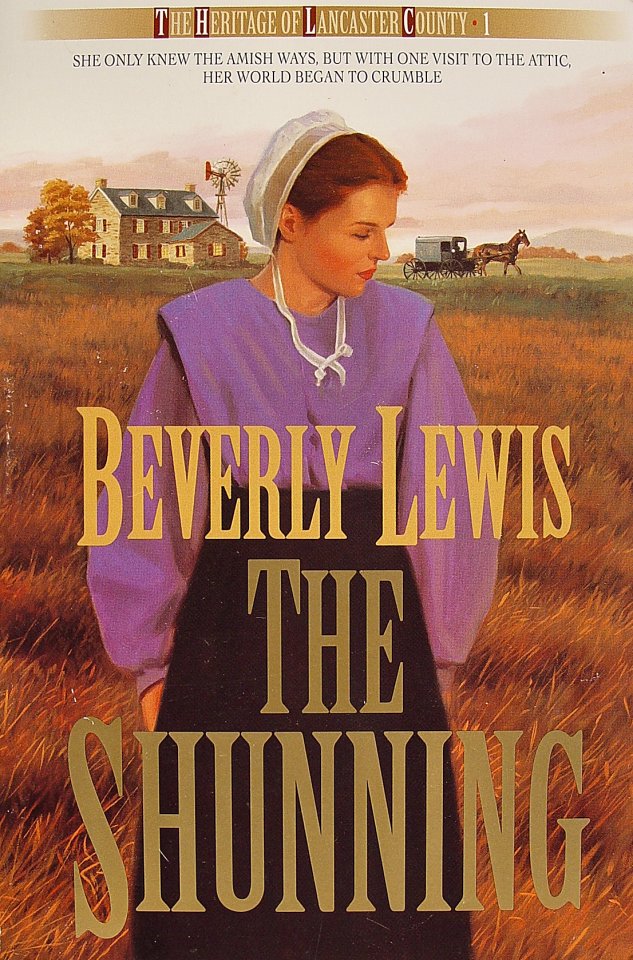
Romance Annotations: The Shunning by Beverly Lewis
The Heritage of Lancaster County #1
By Beverly Lewis
Genres: Romance, Religious Fiction, Amish Fiction, Gentle Reads.
Publication date: 1997
Pages: 283
ISBN: 978-1556618666
Geographical Setting: Lancaster County, Pennsylvania; an insular Amish community in the country called Hickory Hollow.
Time Period: Unspecified, but probably set sometime in the last thirty years. The Amish community setting makes the time period feel more like the mid 1800s in terms of technology and mannerisms.
Series: The Heritage of Lancaster County Trilogy. This is the first book in the series, and is followed by The Confession and The Reckoning.
Plot Summary: Katie Lapp is a 22 year old woman living in an Amish community who has always felt somewhat at odds with the Amish ways of life. She finds the Amish standards dictating her place in society to be stifling and has a secret love of music (which is strictly forbidden). Katie shared this love of music with her first love, an Amish man named Daniel Fisher, until he drowned tragically at sea. Since then Katie has tried to stamp out this passion for music in order to fit into her community and prepare for her upcoming marriage to the local minister John Beiler. However, her attempts to fit in are made more difficult when she discovers a mysterious satin baby dress in the attic that causes a rift between Katie and her mother and casts Katie's whole identity into question. Katie struggles with questions of identity, loyalty, and love in this coming-of-age story of self-discovery.
Subject Headings: Amish fiction, Lancaster County, Amish women, Shunning
Appeals:
- Pacing: leisurely
- Tone: comforting, rustic
- Writing Style: descriptive, reflective, simple
Read-a-likes:

 The Covenant by Beverly Lewis - Lewis is one of the most popular and esteemed writers of Amish fiction and romance, and the first book in the Abram's Daughters series is likely to scratch the same itch as The Shunning. It follows an Amish girl who falls in love with an "English" (non-Amish) boy and has similar themes of questioning and self-identity within a traditionally rigid Amish setting.
Circle of Grace by Penelope J. Stokes - A group of female friends from college decides to keep in touch by writing a collaborative journal that is passed from one to the next. One of the women is diagnosed with terminal cancer and organizes to meet up with her friends in person one last time. She suffers a crisis of faith and identity when she learns that not all of her friends have been entirely truthful in their accounts of their lives in the journal.
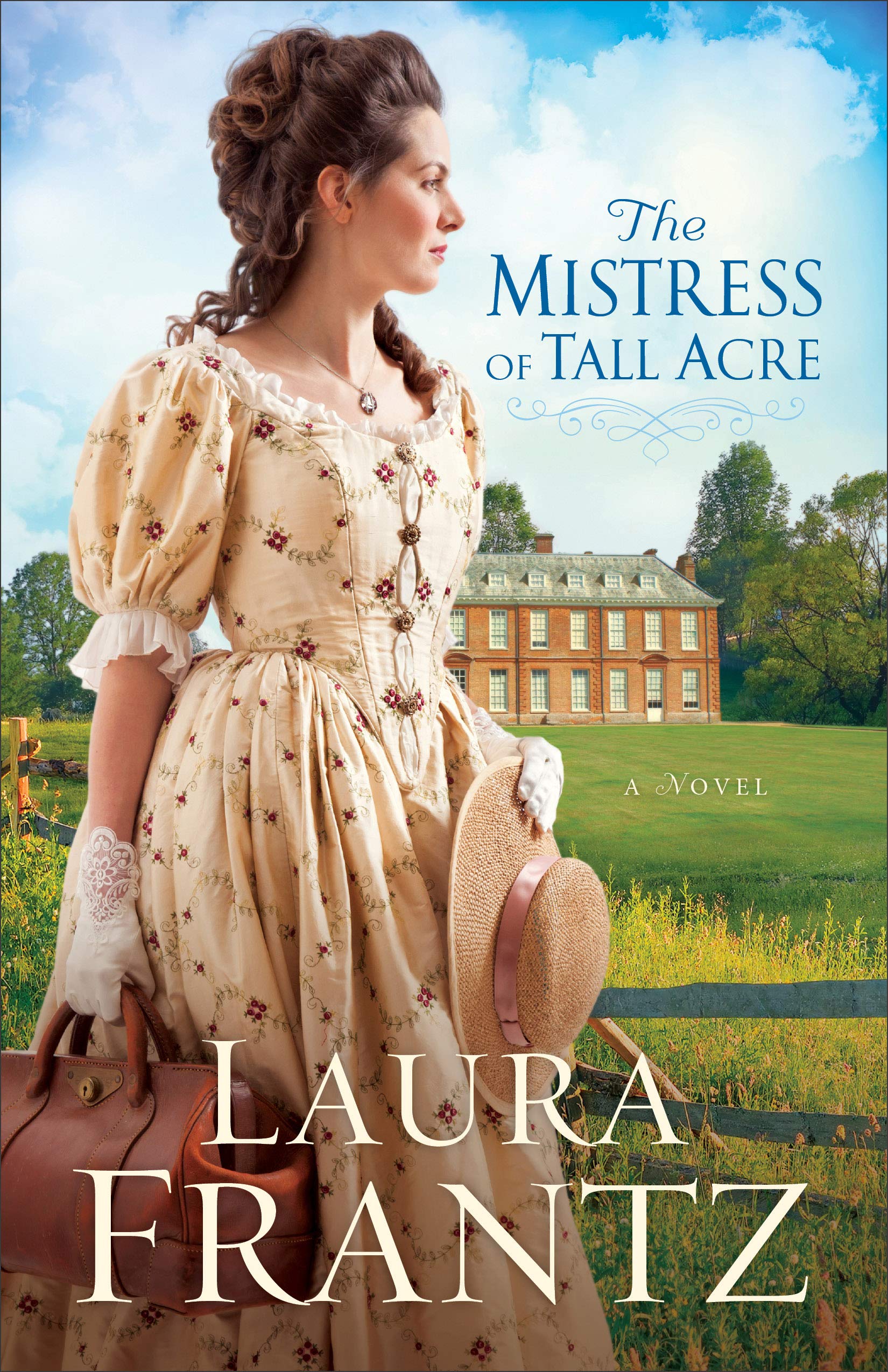
The Mistress of Tall Acre by Laura Frantz - This historical tale of Christian romance follows a woman who marries an army general from the American Revolution. She faces difficult decisions when another woman from her new husband's past arrives and casts her role into doubt. A compelling and fast-paced book with complex characters.
Similar authors:
- Francine Rivers
- Cindy Woodsmall
- Amy Clipston
Sunday, February 10, 2019
Kirkus Review

by Nick Harkaway
A kaleidoscopic novel of interweaving stories, Gnomon is structured like a mind-bending Mobius strip.
In a near-future London, every aspect of life is constantly under surveillance by an artificial intelligence known as The Witness. The Witness's observations normally allow for unprecedented peace and order in society, but something has gone wrong. A suspected dissident named Diana Hunter has died under government interrogation, an unprecedented occurrence under the peaceful reign of The Witness. The story follows Inspector Mielikki Neith, a detective working for the government and The Witness, as she works to unravel the circumstances of Hunter's death. In the world of Gnomon, interrogations are conducted by linking directly to a subject's brain to ensure that no information can be hidden. As Neith investigates the recording of the interrogation, she is shocked to find memories in Hunter's mind that have no right to be there. The perspectives and memories of a Greek mathematician whose near-death encounter with a shark allow him to see a coming collapse of the stock market, a contemporary of St. Augustine who seeks an alchemical path to the underworld, an Ethiopian artist who sets out to design a revolutionary video game, and a hive-mind entity composed of thousands of bodies living in the distant future all vie for attention in Hunter's mind. As Neith tries to separate Hunter's memories from the others, she is pulled into a conspiracy that threatens to unravel her entire reality.
A vivid and fantastical exploration of memory and reality, and of the power of stories to shape and warp our lives.
____________________________________________________________________________________________________
Pub date: January 9th, 2018 Page count: 688pp Review posted online: Feb. 10, 2019
ISBN: 978-1524732080 Publisher: Knopf
_____________________________________________________________________________________________________
Saturday, February 9, 2019
Week 5 Prompt
If I was deciding whether to add The Billionaire's First Christmas to a collection, the two reviews were not wildly convincing. The Amazon review, however, did a nice job of explaining some of the book's appeals and characteristics and giving helpful information (e.g. the book is part of a series, it has multiple points-of-view, there's no explicit sex, etc.). Unfortunately, it did not convince me of the book's quality, and neither did the blog reviewer, who didn't even seem to know what they actually thought about the book after reading it, much less write about it coherently. I would hesitate to add the book to my library's collection, but I wouldn't forget about the appeal factors listed by the Amazon reviewer in case I wanted to recommend the book in a readers' advisory capacity.
The professional reviews for Angela's Ashes, on the other hand, do an excellent job of convincing the reader to add the book to their collection. The reviews are much better written than those for the romantic suspense book, and are given added clout by the publications they're printed in. Because they can more competently describe the appeals of the book, they make it easier for me to understand why I should add it to my library's collection.
I don't think it's entirely fair that print books are reviewed more often and favorably than ebooks or self-published books, but I also think there's something to be said for filtering out lower quality books from being reviewed in order to give more attention to higher quality books. Despite Ranganathan's insistence that every book has its reader, I don't believe all books are created equal, and I appreciate the work of professional reviewers who do their best to identify good writing and excellent books. But I think there are certainly biases in the publishing industry that make it easier for particular types of novels to be published and well-reviewed (literary fiction, for example) and harder for others (like romance).
I think the most important thing when considering to add a book to a library's collection is to consult multiple reviews from different types of sites. I think Goodreads is a fantastic place to get people's opinions on a book, even if there is a range of quality to the reviews, because reviewers are unafraid to make very clear what aspects of the book did and did not appeal to them. But I think it's helpful to also cross reference those reviews with reviews from more prestigious publications like Library Journal, Booklist, and Kirkus to make a more informed decision. I also think it's worth tracking down reviews of genre fiction from places that specialize in that genre. For example, Tor.com's science fiction and fantasy blog probably has a more nuanced review for new sci-fi/fantasy titles than Kirkus does because it assumes a certain level of reader familiarity with the genre, allowing it to place the book under review in the context of the rest of the genre and provide a more granular feel for its appeals.
I don't have strong feelings about review sources that don't print negative reviews, because I think positive reviews are generally more helpful (from a collection management, readers' advisory, and personal reading perspective) than negative ones. I'd rather read reviews that get me excited about a book and that communicate the passion the reviewer has for it than reviews that just dunk on a mediocre book. The latter type of review may be fun to write and is occasionally fun to read, but ultimately feels like a bit of a waste of time to me if I'm looking for something to read rather than something not to read. So I appreciate when reviewing sites take the time to pick through a lot of books and only review the ones they find most exciting.
I do a lot of purchasing for my library and it's the really positive reviews that give me the best sense of what to order and what might be most exciting for our readers. My library is quite small, though, and our budget isn't huge, so maybe if I had more books to purchase each month I would welcome more negative reviews to narrow down the field of potential acquisitions.
The professional reviews for Angela's Ashes, on the other hand, do an excellent job of convincing the reader to add the book to their collection. The reviews are much better written than those for the romantic suspense book, and are given added clout by the publications they're printed in. Because they can more competently describe the appeals of the book, they make it easier for me to understand why I should add it to my library's collection.
I don't think it's entirely fair that print books are reviewed more often and favorably than ebooks or self-published books, but I also think there's something to be said for filtering out lower quality books from being reviewed in order to give more attention to higher quality books. Despite Ranganathan's insistence that every book has its reader, I don't believe all books are created equal, and I appreciate the work of professional reviewers who do their best to identify good writing and excellent books. But I think there are certainly biases in the publishing industry that make it easier for particular types of novels to be published and well-reviewed (literary fiction, for example) and harder for others (like romance).
I think the most important thing when considering to add a book to a library's collection is to consult multiple reviews from different types of sites. I think Goodreads is a fantastic place to get people's opinions on a book, even if there is a range of quality to the reviews, because reviewers are unafraid to make very clear what aspects of the book did and did not appeal to them. But I think it's helpful to also cross reference those reviews with reviews from more prestigious publications like Library Journal, Booklist, and Kirkus to make a more informed decision. I also think it's worth tracking down reviews of genre fiction from places that specialize in that genre. For example, Tor.com's science fiction and fantasy blog probably has a more nuanced review for new sci-fi/fantasy titles than Kirkus does because it assumes a certain level of reader familiarity with the genre, allowing it to place the book under review in the context of the rest of the genre and provide a more granular feel for its appeals.
I don't have strong feelings about review sources that don't print negative reviews, because I think positive reviews are generally more helpful (from a collection management, readers' advisory, and personal reading perspective) than negative ones. I'd rather read reviews that get me excited about a book and that communicate the passion the reviewer has for it than reviews that just dunk on a mediocre book. The latter type of review may be fun to write and is occasionally fun to read, but ultimately feels like a bit of a waste of time to me if I'm looking for something to read rather than something not to read. So I appreciate when reviewing sites take the time to pick through a lot of books and only review the ones they find most exciting.
I do a lot of purchasing for my library and it's the really positive reviews that give me the best sense of what to order and what might be most exciting for our readers. My library is quite small, though, and our budget isn't huge, so maybe if I had more books to purchase each month I would welcome more negative reviews to narrow down the field of potential acquisitions.
Saturday, February 2, 2019
Secret Shopper Assignment
I visited my local public library to ask for a book recommendation, and the librarians seemed very unprepared to answer such a question! I think my question took the reference librarian off-guard, and she wasn't able to find any good recommendations for me. Part of the problem was that she didn't use any readers' advisory tools, and instead chose to walk me over to the new books display and pull a few titles off the shelf at random, none of which really fit my request (I had asked for a good science fiction novel). She eventually had me talk to the librarian who orders science fiction materials, but he was more interested in having a conversation with me about the sort of books he liked than finding a good recommendation for me. In the end he wished me luck with my search, but didn't provide any great leads. I would be hesitant to use this library again for readers' advisory questions, and my impression is that the librarians there don't get many questions of this type.
Subscribe to:
Comments (Atom)